Ways We Kill Ideas

There’s a moment in every organization, every team and, if we’re honest, in every mind when an idea appears.

Sometimes quietly. Sometimes with energy. Sometimes still fragile, sometimes surprisingly sharp. And then it happens.
Not dramatically. Not all at once.
It gets killed.
“Yeah, but…”
“That won’t work.”
“We’ve already tried that.”
“Let’s be realistic.”
“Let’s wait and see…”
These aren’t just phrases. They’re micro-decisions. Fast, convenient ways to shut something down without really engaging. To protect the status quo. To avoid risk or responsibility.
What’s striking is that they rarely come from bad intentions. More often, they come from habit. From cultures that reward certainty over curiosity. From experience that taught us it’s safer to say “no” than to explore “what if.”
Each “this won’t work” sounds like common sense.
Each “too early” sounds like caution.
Each “too late” sounds like realism.
But put them together, and you create an environment where nothing new survives. Because ideas don’t die in big moments. They get suffocated comment by comment, doubt by doubt.
The most dangerous ones aren’t even the obvious blockers. They’re the polished, professional-sounding ones:
• “It’s interesting, but not in our environment.”
• “I don’t see the connection.”
• “Our people won’t accept this.”
They sound reasonable. Mature. And yet the result is the same. Silence. No movement. A return to what we already know.
If you want to test whether this happens in your team (or in your own thinking), try a simple experiment: for one day, notice your first reaction to a new idea.
Is it curiosity? Or is it a filter?
There is an alternative.
Instead of “this won’t work” → “what would need to happen for this to work?”
Instead of “we’ve tried this” → “what did we learn last time?”
Instead of “let’s be realistic” → “what would a bold version look like?”
Small shifts. Big difference.
This isn’t about implementing every idea. It’s about giving it a moment to live. Space to develop. A chance to show what it could become. Because organizations don’t have an idea problem.
They have a survival problem.
We say we value innovation, but we reward certainty. We ask for creativity, then punish anything that looks unfinished. So people learn. They stop sharing early thoughts. They filter themselves. They bring only what feels safe.
And over time, the ideas don’t disappear the courage to express them does.
The same pattern shows up closer to home, too. In families, in conversations, in everyday moments. A thought is cut off. A curiosity is brushed aside. A different perspective is labeled as wrong too quickly. Not out of malice but out of habit.
And just like that, something small but important gets lost.
Because ideas aren’t just business assets. They’re how people connect, grow, and understand each other. When we shut them down too fast, we’re not just limiting outcomes we’re limiting people.
Not every idea deserves execution. But every idea deserves a moment of respect.
Sometimes, that moment is all it takes for something meaningful to emerge.

💡34 Ways we kill ideas:
• Yes, but…
• We’ve never done this before!
• We already worked on this.
• This won’t work!
• Too theoretical.
• Not well-grounded in theory.
• What will “the top” (management) think?
• If it were good, someone would have thought of it earlier.
• Too modern (too avant-garde, too original).
• Too outdated.
• You don’t understand the situation we’re in!
• We’re too small for this.
• We’re too big for this.
• We’re just beginners — we can’t take this on.
• This has worked for 20 years, so it must be good.
• And who came up with this?
• I just know this won’t work!
• We’ll never manage to pull this off.
• Let’s not fight windmills!
• Let’s be realistic!
• Let’s be practical!
• Let’s wait and see…
• I don’t see any connection.
• This won’t work in our environment.
• This will only cause trouble.
• We’ve done perfectly fine without it.
• It’s too early for this!
• It’s too late for this!
• What will Mr. X think?
• Our people won’t accept this.
• You simply don’t understand what our problem is!
• You can’t teach an old dog new tricks.
• No youngster is going to tell me what to do!
• No, I just can’t!
⸻
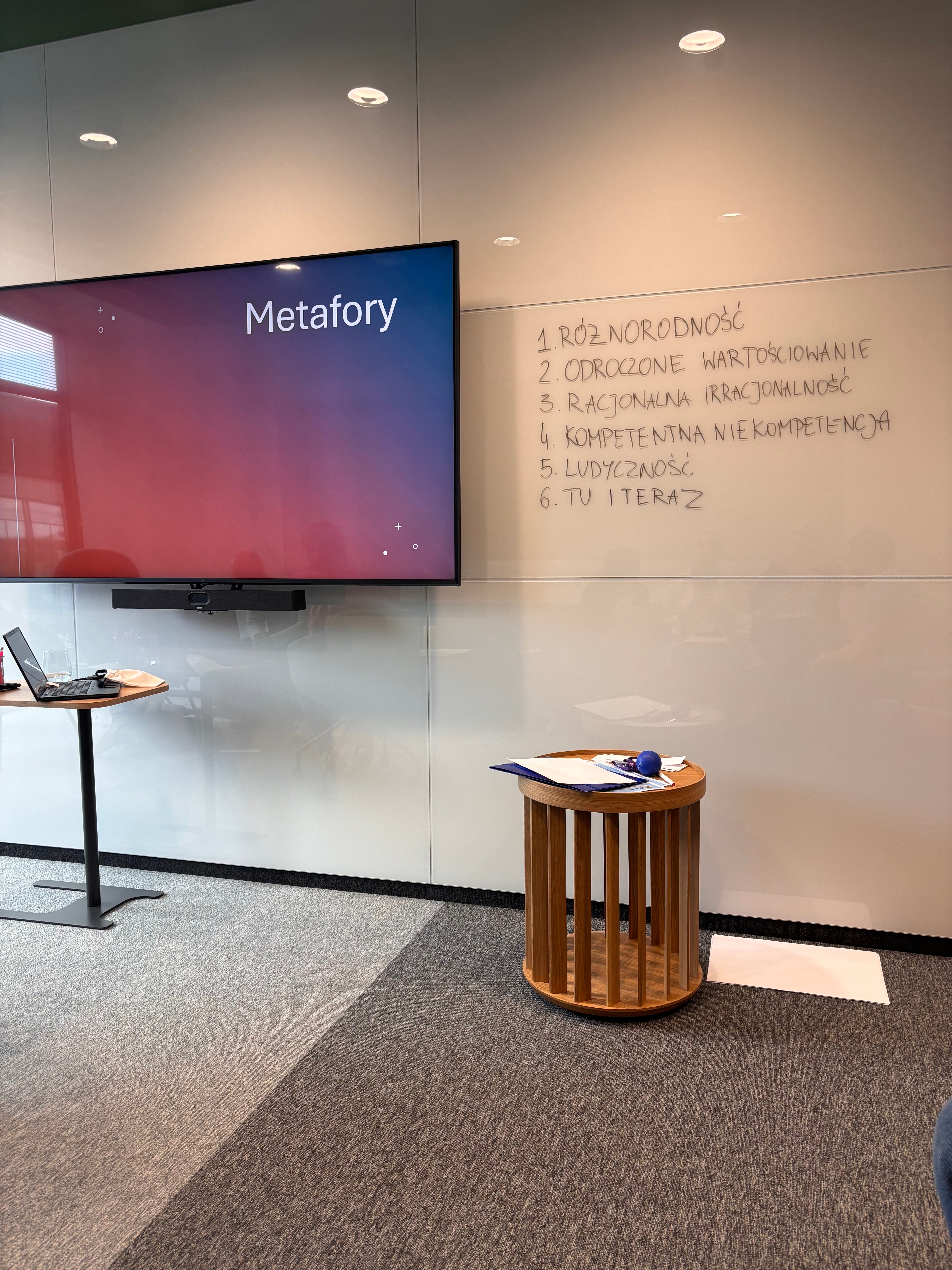
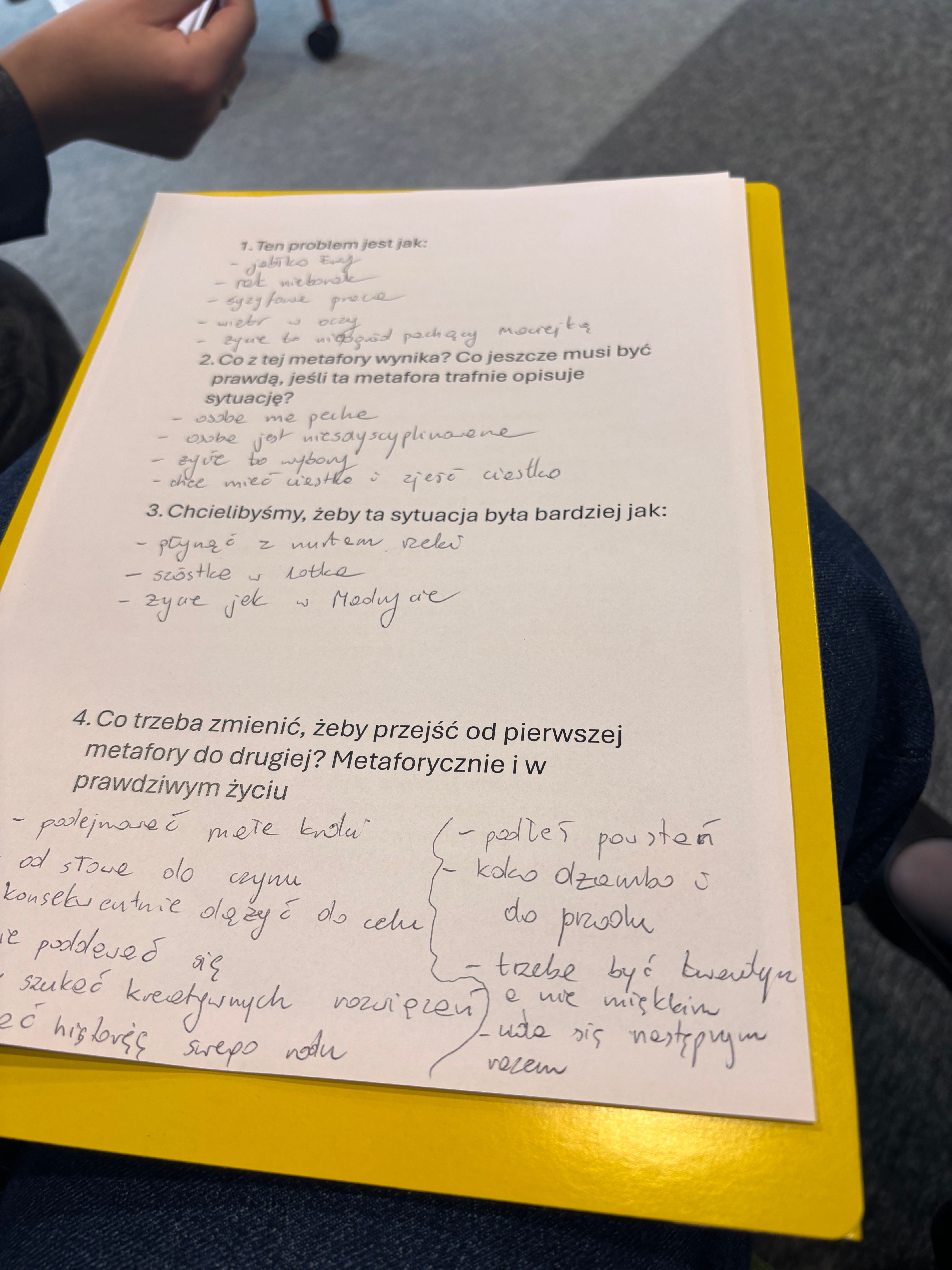
Inspired by a creativity workshop I attended on April 9, led by Aleksandra Olewniczak, and by works on creativity including:
• Nęcka, E., Gruszka, A., Orzechowski, J., & Szymura, B. (2019), Training Creativity
• Nęcka, E. (2003), Psychology of Creativity
• Paszkowski, M. (2008), Discover Creativity Within Yourself